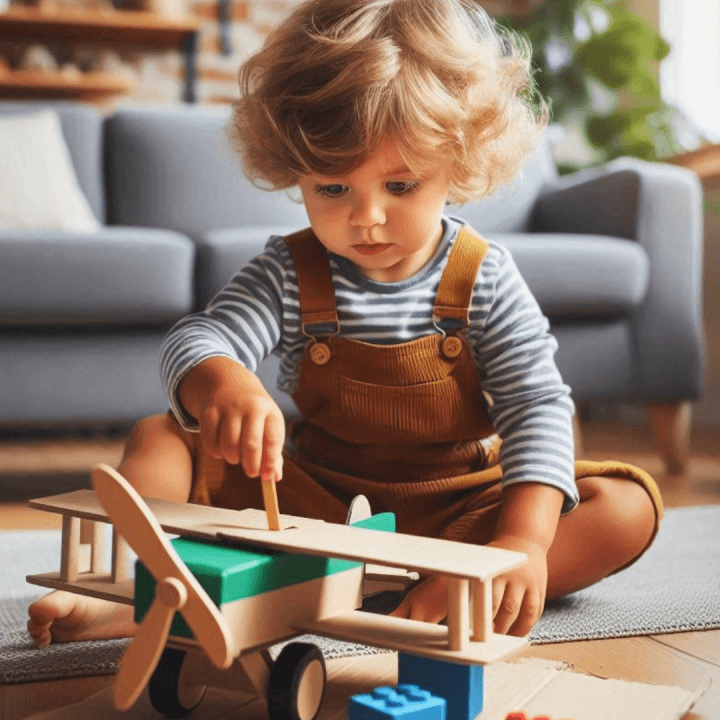
Toddlerhood. It's a whirlwind of tiny humans, sticky fingers, and the constant quest for clean socks. Amidst the chaos, the future of AI probably feels like the least of your worries. But here's the thing: while we're navigating potty training and picky eaters, we're also laying the foundation for our kids' future, a future that will be profoundly shaped by technology, specifically AI.
This article is part of the AlphaMa guide to AI for families.
Now, before you panic and start researching coding classes for two-year-olds, let me stop you. This isn't about turning our toddlers into tech wizards. It's about something much more fundamental: nurturing their humanity, the very essence that distinguishes us from machines. This aligns perfectly with the core message of "Superagency" by Reid Hoffman, a book exploring how AI can amplify human capabilities, not replace them.
Human-Centered AI
"Superagency," as championed by Reid Hoffman and supported by the insights of thinkers like Fei-Fei Li, Bill Gates, Arianna Huffington, and others, envisions a future where AI empowers individuals, a "superagency" for everyone. But this future isn't about cold, calculating machines. It's about human-centered AI, where technology serves humanity. And that starts with raising kids who understand and embody core human values.
What Machines Cannot Do
What can machines not do? They can't feel empathy. They can't truly connect with others on a deep, emotional level. They can't conjure up a brilliant idea out of thin air through sheer imagination. These are the superpowers our kids need to thrive in a world increasingly influenced by AI.
The book emphasizes the power of creativity and innovation. With our toddlers, it's about fostering their natural creativity, that ability to turn a cardboard box into a spaceship or a blanket into a fort. This kind of imaginative play is the training ground for future innovators, the "superagents" of tomorrow.
How to Foster Essential Human Skills
The good news is, you're probably already doing it!
Curiosity = Future Innovator
That endless stream of "why?" questions? Annoying, right? But it's the sign of a budding innovator. Nurture that curiosity! Let them explore, even if it means a slightly messier house. AI can help us "become more essentially human," and curiosity is a fundamental part of that.
Communication = Future Collaborator
Even if their vocabulary currently consists of "mama," "dada," and "no!", they're learning the building blocks of communication. Read to them, sing to them, talk to them. These interactions build language skills and the ability to connect with others, vital for collaborating in any context, including an AI-driven one.
Problem-Solving = Future Critical Thinker
Remember that time your toddler spent ten minutes trying to stack those blocks? That's problem-solving in action! Let them struggle. Resist the urge to always jump in and fix everything. Give them space to figure things out on their own. This fosters the critical thinking skills that will be essential for navigating the complexities of an AI-powered world.
Creativity = Future Dreamer
A cardboard box? To a toddler, it's a spaceship, a castle, anything their imagination conjures up. Encourage this creativity! Let them paint, let them build, let them pretend. This kind of play is essential for developing creative thinking, a uniquely human skill that AI cannot replicate.
Social-Emotional Skills = Future Leader
Sharing (or not sharing!), taking turns, these are big lessons for toddlers. These social-emotional skills are crucial for building relationships and navigating the world. Playdates, interactions with other kids, and even reading books about feelings can help them develop these essential skills, which are crucial for effective leadership and collaboration.
The Bottom Line
Just like building a successful agency requires a focus on human connection, creativity, and adaptability, raising resilient and successful kids in the age of AI requires the same core principles. We're not preparing our toddlers for a specific job or a specific technology. We're preparing them to be adaptable, resilient, and human in a world that will constantly be changing.
So, take a deep breath, enjoy these precious toddler years, and know that you're already doing an amazing job. You've got this!