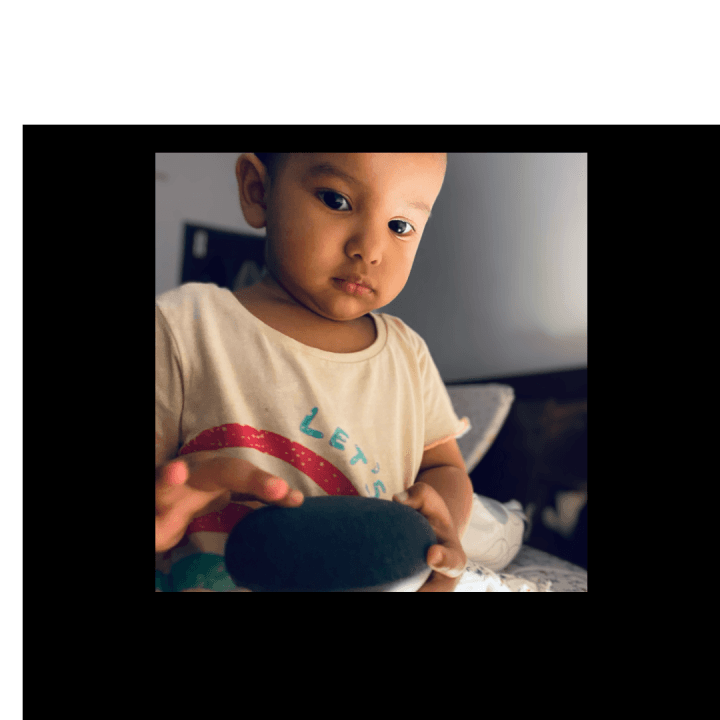
Remember that time your toddler spent ten minutes trying to figure out how to stack those blocks? Or the endless stream of "why?" questions that sometimes drive you a little crazy? That, my friends, is the foundation of a future AI innovator in the making!
This article is part of the AlphaMa guide to AI for families.
It might seem strange to think about AI and toddlers in the same sentence. But the truth is, we can introduce basic AI concepts to even the littlest learners in a way that's fun, engaging, and sparks their natural curiosity. No, we're not talking about coding classes for two-year-olds (though, hey, if that's your jam, go for it!). It's about fostering those foundational skills that will help them navigate a world increasingly shaped by AI.
And sometimes, those AI interactions lead to some pretty surprising milestones. For example, my daughter Siyara's first word wasn't "Mama" or "Dada." It was "Hey Doodle!" Yep, you read that right. Inspired by our frequent use of "Hey Google," she decided that "Doodle" was the way to get the voice assistant's attention. It was a hilarious and unexpected moment that showed me just how much our kids are absorbing from the world around them, including the technology they interact with.
The Magic of Voice Assistants
"Hey Siri/Alexa/Google, play my favorite song!" Voice assistants are a fantastic entry point to AI for little ones. Let them see how their voice can control technology. Explain that there's a "smart helper" inside the device that listens and learns.
- "Alexa, tell me a story!" Explore the storytelling capabilities of voice assistants. Talk about how the device can remember different stories and even create new ones.
- "Hey Google, what's the weather like today?" Use voice assistants to answer questions about the world. Explain that the device is using information from the internet to provide answers.
AI-Powered Toys and Games
- Interactive robots: There are some amazing AI-powered robots designed specifically for young children. These robots can respond to touch, voice, and even emotions, introducing basic concepts of interaction and learning.
- Educational apps: Many apps use AI to personalize learning experiences for kids. These apps can adapt to your child's pace and interests, making learning more engaging.
- AI-powered games: Some games use AI to create dynamic and challenging experiences. These games can adapt to your child's skill level, keeping them engaged and motivated.
Everyday AI Encounters
- "Look, the car is parking itself!" Point out examples of AI in everyday life. Self-driving cars, personalized recommendations on streaming services, and even spam filters are all examples of AI at work.
- "This app helps me find the fastest route to Grandma's house!" Explain how AI is used in navigation apps to find the best route, taking into account traffic and other factors.
- "The camera on my phone knows it's a picture of a cat!" Talk about how AI is used in image recognition to identify objects and faces in photos.
Stories and Activities
- Read books about AI: There are some great children's books that introduce AI concepts in a fun and accessible way.
- Watch videos about AI: YouTube and other platforms have educational videos about AI for kids.
- Do AI-related activities: Simple activities like drawing robots or creating a "smart home" with cardboard boxes can spark imagination and curiosity.
Remember
- Keep it simple: Focus on basic concepts and use age-appropriate language.
- Make it fun: Learning about AI should be an enjoyable experience.
- Encourage questions: Curiosity is key! Let your child's questions guide the conversation.
- Connect it to their interests: If your child loves dinosaurs, talk about how AI can be used to study fossils. If they love music, explore AI-powered music apps.
By introducing AI concepts in a playful and engaging way, we can spark our children's curiosity and lay the foundation for a lifelong love of learning and exploration. After all, these little ones are the future innovators and problem-solvers who will shape the world of tomorrow!