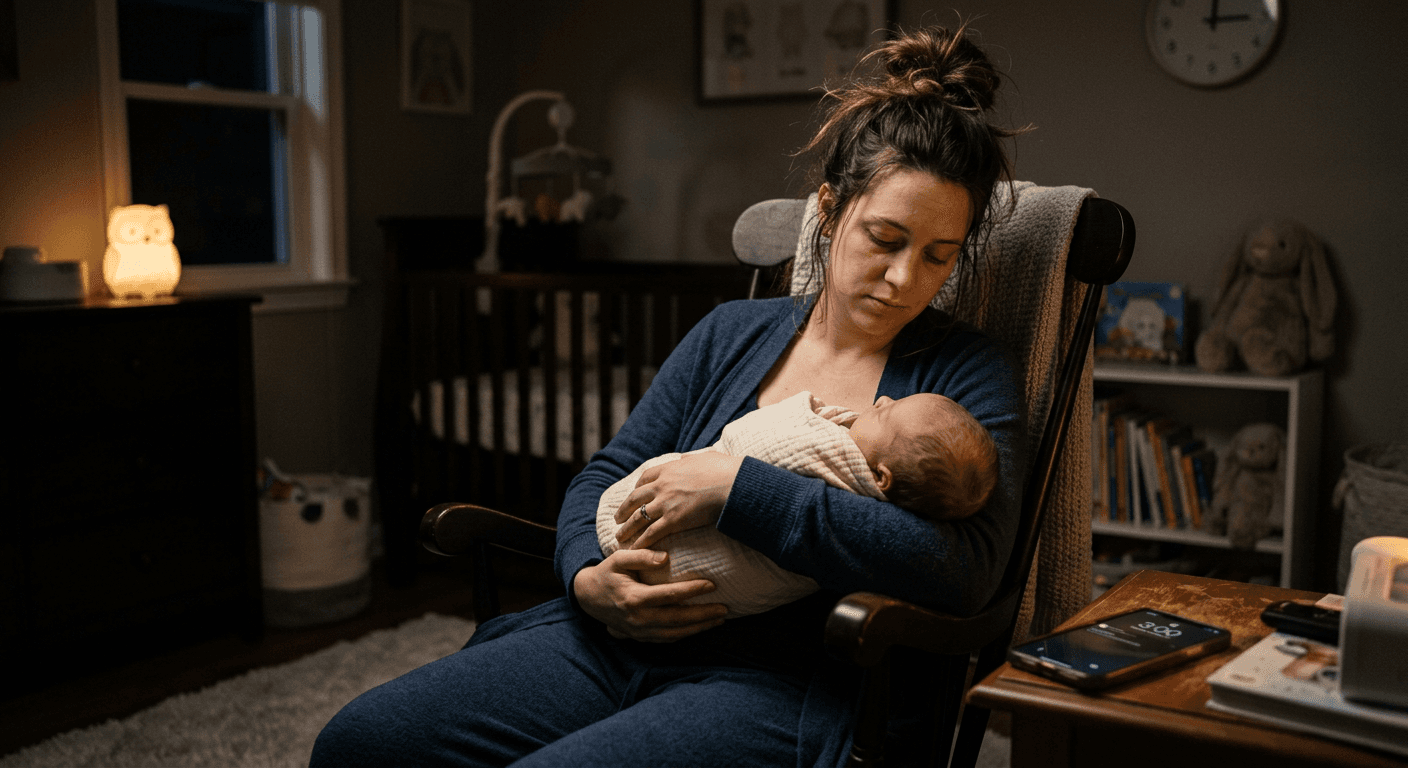
The baby is finally asleep. This is your window, the rest you have been craving all day. And yet you are wide awake, heart going, checking if she is breathing, Googling a symptom, running through everything that could go wrong. This is not simply new-mom worry. For many mothers, this is postpartum anxiety, and it is real, common, and treatable.
Why you are awake when you could be sleeping
Postpartum anxiety hijacks the one thing you need most: rest. Your body is exhausted, but your mind is stuck in high alert, scanning for danger that will not arrive. You lie there listening to the monitor, replaying worries, unable to switch off, even though you know, logically, that the baby is fine.
That gap between knowing she is okay and not being able to feel it is the signature of postpartum anxiety. It is not you being dramatic or failing to cope. It is an overactive alarm system, and alarm systems can be turned down.
What postpartum anxiety is
Postpartum anxiety is excessive, hard-to-control worry in the weeks and months after birth. It is less talked about than postpartum depression, but it is at least as common, affecting a large share of new mothers. It can stand alone or sit alongside depression.
It is more than the normal carefulness every new parent feels. It is worry that takes over: constant, intrusive, and physically draining.
Signs it is more than ordinary new-mom worry
Some vigilance is normal and protective. Postpartum anxiety is when that vigilance stops serving you and starts running you. Common signs:
- Racing, looping thoughts you cannot turn off, often about something terrible happening to the baby.
- Checking and reassurance that never quite settles you, getting up again and again to confirm she is breathing.
- Physical symptoms, a pounding heart, tight chest, nausea, dizziness, restlessness.
- Trouble sleeping even when the baby sleeps, because your mind will not stand down.
- Irritability or a constant sense of dread, feeling on edge as if something bad is about to happen.
- Avoiding things, not letting others hold the baby, not leaving the house, because the worry feels safer to manage that way.
Why postpartum anxiety happens
It is not because you are a worrier or doing anything wrong. After birth your hormones drop off a cliff, you are profoundly sleep-deprived, and you are suddenly responsible for a fragile new life. Your brain responds by cranking the threat-detection system to maximum. For some mothers it settles on its own. For many, it gets stuck on high, and that is postpartum anxiety. It is biology and circumstance, not weakness.
Postpartum anxiety vs postpartum depression
They often travel together, and they are distinct. Anxiety is dominated by fear and worry, a mind that will not stop and a body that will not relax. Depression is dominated by heaviness, sadness, numbness, loss of interest, and sometimes hopelessness. Many mothers have both. The good news is the same for each: both are common, both are temporary, and both are treatable with the right support.
What helps, tonight and beyond
In the moment, when you are spiraling at 3am, you cannot logic your way out, but you can signal safety to your body. Slow your breath out longer than you breathe in. Put both feet on the floor and name five things you can see. Remind yourself, gently, that this feeling is the alarm, not the truth.
Longer term, postpartum anxiety responds well to treatment. Talk therapy, especially approaches built for anxious thinking, helps a great deal, and for some mothers medication that is compatible with breastfeeding makes a real difference. Protecting sleep where you can, sharing night duty, and lowering your overall load all turn the dial down.
You do not have to earn help by suffering longer first.
When to call your doctor
Please reach out to your OB, midwife, or doctor if the worry is interfering with your sleep, your eating, or your ability to enjoy your baby, if it has lasted more than two weeks, or if it is getting worse instead of better. You can say it simply: "I cannot stop worrying, I cannot sleep even when the baby does, and it has been getting worse." They will know what to ask.
If you ever have thoughts of harming yourself or the baby, or thoughts that frighten you, treat it as urgent: contact your doctor right away, or a crisis line such as 988 in the US. This is not a judgment on you as a mother. It is a medical situation that deserves fast, kind care.
You are not alone in the dark
If your nights look like this, you are not broken and you are not a bad mother. You have an overworked alarm system and too little support, and both can change.
When the worry hits at an hour no one else is awake, having something there helps. AlphaMa is a voice-first AI life partner built for mothers, there at 2am to listen without judgment, help you ground, and keep the notes you can bring to your doctor. It complements professional care, it does not replace it. You can also read more about the mental load that keeps so many mothers awake.