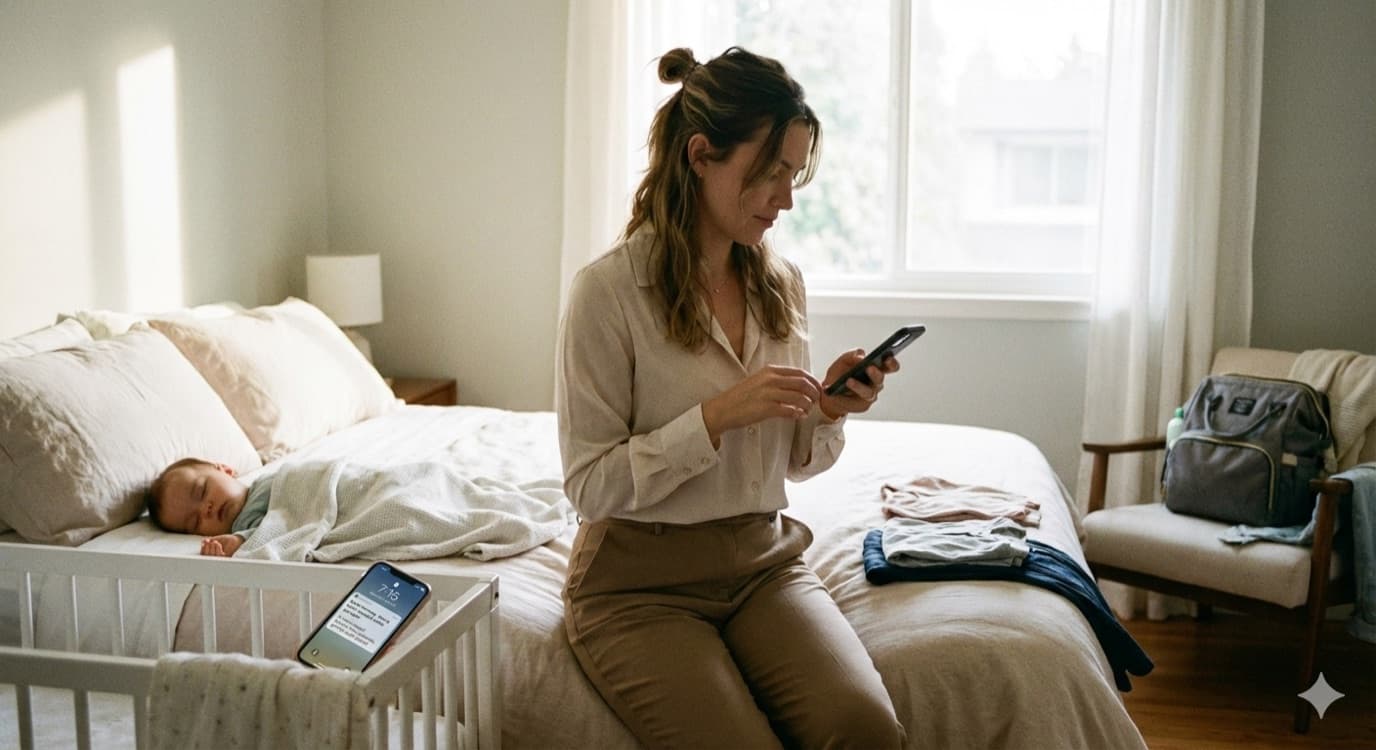
Baby blues vs postpartum depression is the difference between a short, self limited dip in mood that fades within two weeks of birth and a persistent depressive illness that deepens, disrupts daily function, and does not resolve without treatment. The two can look identical on day four and unmistakably different on day fourteen, which is exactly why the two week mark matters.
The baby blues are not a lesser version of a disorder. They are a normal adjustment that clinicians treat as expected rather than pathological. ACOG describes the baby blues as normal feelings of sadness, fear, anger, or anxiety that start about three days after childbirth and usually get better within one to two weeks without any treatment. Cleveland Clinic notes the blues affect up to 3 in 4 new mothers. You cry in the shower, you feel overwhelmed by the enormity of it, and then by the end of the second week the fog thins without anyone doing anything in particular.
Postpartum depression behaves differently. The National Institute of Mental Health explains that most episodes of perinatal depression begin within four to eight weeks after birth, and that mood changes which are severe or last longer than two weeks may signal postpartum depression, which generally will not improve on its own. Cleveland Clinic puts the lifetime stakes plainly: up to 1 in 7 mothers develop postpartum depression, days feel mostly bad instead of mostly good, and symptoms interfere with caring for yourself or your baby. If any of this fits you right now, postpartum support starts with telling one professional the truth about how the weeks have felt.
What are the baby blues, exactly?
The baby blues arrive early, peak fast, and leave on their own schedule. The typical picture, drawn from ACOG and NIMH guidance, looks like this: onset around day two to five after birth, teariness that arrives in waves several times a day, irritability, anxiety, and feeling overwhelmed but still able to feel moments of joy and to function between the waves. Sleep helps. A long nap, a pumped bottle, or a visit from your own mother visibly improves things.
The mechanics are not mysterious. NIMH lists the physical and emotional demands of childbirth, hormonal shifts, and life stress among the contributors to perinatal mood changes. Estrogen and progesterone fall sharply in the 72 hours after delivery while you are also running on fragmented sleep. The blues are your nervous system recalibrating under those conditions.
What the blues never include: numbness that persists all day, thoughts of harming yourself, an inability to sleep even when the baby sleeps, or a feeling of dread that intensifies rather than lifts as the days pass. Those are not on the blues spectrum, and waiting to see if they fade is the one mistake worth avoiding.
How do you tell baby blues vs postpartum depression at two weeks?
Day 14 is the sorting point that ACOG and NIMH both use, and the honest test is what the trend line looks like rather than any single bad hour. Screenshot this and compare it against your last week:
| Question | Baby blues | Postpartum depression | |---|---|---| | How long has it lasted? | Under 2 weeks, improving | Past 2 weeks, same or worse | | How much of the day? | Waves minutes at a time | Sad or empty most of the day, nearly every day | | Can you function? | Yes, between the waves | Daily tasks and baby care feel impossible | | Sleep when baby sleeps? | Yes, exhausted but able | No, wired or racing even when the baby sleeps | | Bonding | Still warm toward the baby | Numb, detached, or persistently doubtful | | Enjoyment | Moments of joy most days | Interest and pleasure largely gone | | Scary thoughts | Fleeting worries | Thoughts of death, harm, or being better off gone |
Two patterns override the table entirely. First, anything on that last row, thoughts of harming yourself or your baby, needs help today, not at day 14, regardless of how recent birth was. Second, symptoms can emerge later than people expect. Cleveland Clinic notes postpartum depression can develop gradually up to a year after birth, most often around six weeks postpartum. Clearing the two week checkpoint does not immunize you against the later onset, so keep the table.
What should you do on day 14 if the fog has not lifted?
Call your OB, midwife, or family doctor and say the specific sentence: I am two weeks postpartum and my mood has not improved. That single sentence gets you screened. NIMH lists persistent sad or anxious mood most of the day for at least two weeks, loss of interest, and trouble bonding as core symptoms providers look for. ACOG guidance treats mood screening as a routine part of postpartum care, so you are not overreacting by raising it.
Treatment is genuinely effective. NIMH describes therapy, medication, or a combination, and names cognitive behavioral therapy and interpersonal therapy as evidence based approaches, plus newer options like zuranolone, the first FDA approved oral medication for postpartum depression. Most women improve with proper treatment. Day 14 is not when you white knuckle harder. It is when the clinical pathway opens.
In the gap between noticing and the appointment, support matters. For a deeper map of what this can feel like from the inside, our article on what postpartum depression feels like describes the texture of the weeks mothers rarely say out loud, and our comparison of postpartum anxiety vs depression helps if fear rather than flatness is your loudest symptom.
What does postpartum psychosis look like instead?
One more condition sits off this spectrum entirely, and knowing it exists is safety critical. Postpartum psychosis is rare, affecting about 1 in 1,000 mothers after delivery according to Cleveland Clinic, and NIMH describes it as a psychiatric emergency: delusions, hallucinations, paranoia, mania, and confusion that come on quickly. If you or someone close to you shows these signs, call 911 or go to the nearest emergency room rather than waiting for a scheduled appointment. It is treatable, and fast action protects everyone.
Can an app help while you wait for answers?
An app is a bridge, never a destination. AlphaMa is an AI companion for mothers that uses cognitive behavioral techniques to help you track mood day by day, notice the difference between a rough wave and a two week pattern, and word the hard sentence for the doctor before the appointment. Used honestly, that is what the two week window is for: observing closely enough that your report to a clinician is precise. AlphaMa supports that work. It does not screen for, diagnose, or treat depression, and the day 14 call to a professional is still the move.
Wherever today falls in your timeline, the rule of thumb holds: under two weeks and improving is the blues, past two weeks and deepening is a conversation with your provider. In the US, you can call or text 988 for crisis support any time, day or night, and Postpartum Support International offers a directory of local perinatal help. Bring the table, say the sentence, and let a professional take it from there.
Related reading:
- When to Call the Doctor After Birth: A Week by Week Guide
- Postpartum Anxiety Symptoms Checklist for the First Year
- Postpartum Burnout: The Signs, and What Actually Helps
Sources
- National Institute of Mental Health, Perinatal Depression publication, reviewed content on baby blues vs postpartum depression, symptoms beginning 4 to 8 weeks after birth, CBT and IPT as evidence based therapies, zuranolone approval, and postpartum psychosis as a psychiatric emergency https://www.nimh.nih.gov/health/publications/perinatal-depression
- American College of Obstetricians and Gynecologists, Postpartum Depression FAQ091, published April 2024, last reviewed December 2025: baby blues defined as normal feelings of sadness, fear, anger, or anxiety starting about 3 days after childbirth and improving within 1 to 2 weeks without treatment https://www.acog.org/womens-health/faqs/postpartum-depression
- Cleveland Clinic, Postpartum Depression (PPD), last updated March 2026: baby blues affect up to 3 in 4 after delivery, up to 1 in 7 develop postpartum depression, onset possible up to one year after birth and most common around six weeks postpartum, postpartum psychosis affects 1 in 1,000 https://my.clevelandclinic.org/health/diseases/9312-postpartum-depression