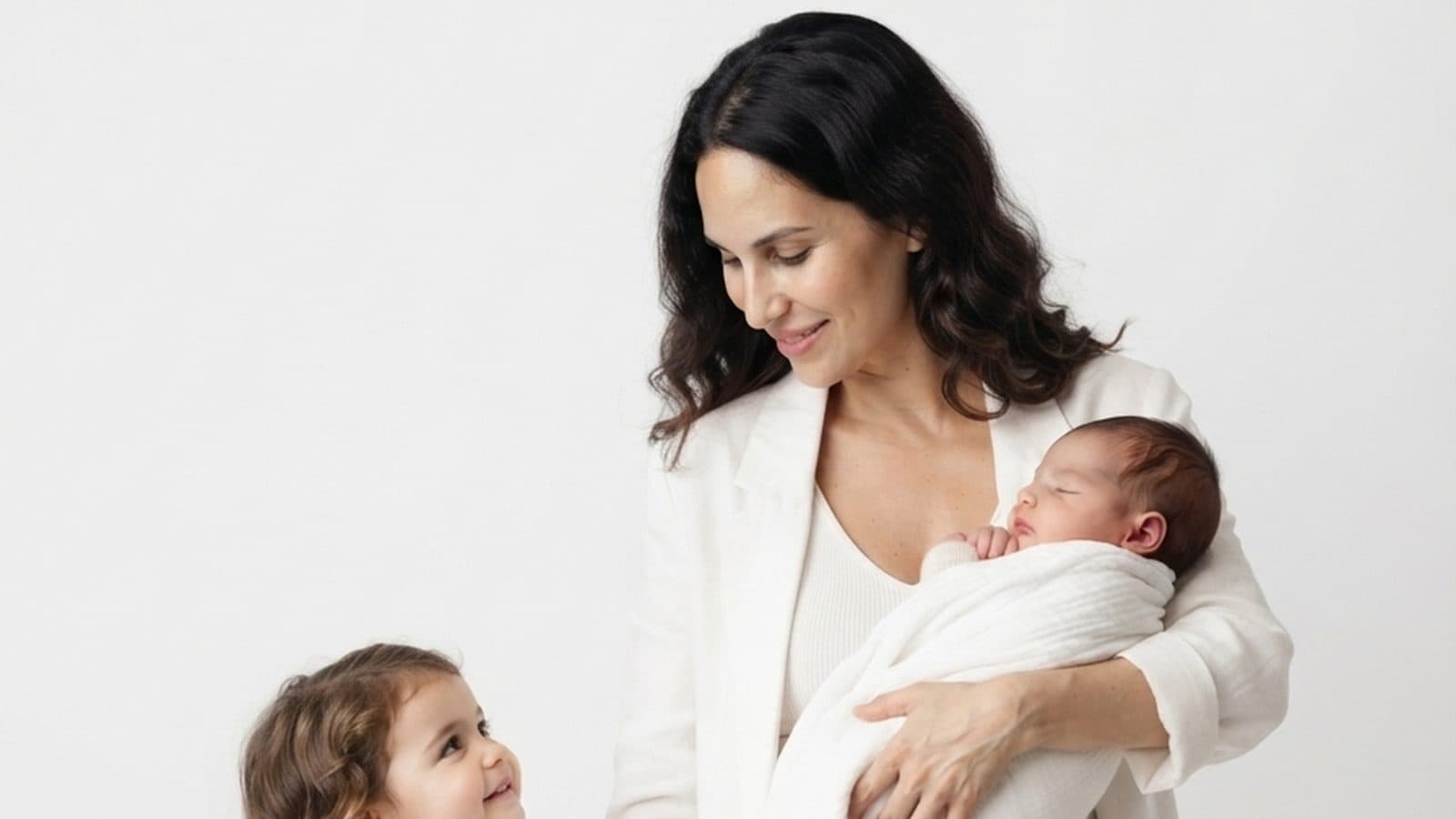
Postpartum depression with a second baby is a depressive episode in the weeks or months after a second or later birth, and it can hit harder because you are recovering from birth while actively parenting an older child, often with less help, less novelty, and a personal history that raises the risk of recurrence. If you sailed through the first postpartum and feel wrecked this time, or if the first one broke you and you are terrified of a repeat, this article is for you.
It is part of our guide to postpartum support, and it walks through what the recurrence research actually says, why the second postpartum feels so different from the first, and how to build a plan. If you are still deciding whether your family is complete, the piece on two kids and decision fatigue covers the thinking load that comes before any of this.
Can you get postpartum depression with a second baby?
Yes, and not only can you, the risk goes up if you have had it before. Postpartum depression affects roughly 5 to 15 percent of mothers after childbirth. A Danish national register study published in PLOS Medicine in 2017 followed 457,317 first-time mothers with no prior psychiatric history across 789,068 births. Women who had a postpartum depressive episode treated with antidepressants after their first birth were 26.9 times more likely to have a recurrent postpartum episode after their second birth, and women whose first episode involved hospital contact were 46.4 times more likely, compared with mothers who had no postpartum episode the first time.
Read that again, because it reframes what a first episode means. The researchers described the single initial episode as a marker for a vulnerable group, and recommended preventive measures for these mothers in later pregnancies. The National Institute of Mental Health says the same thing in plainer language: women with a history of perinatal depression should work with a health care provider to develop a follow-up care plan in case a depressive episode recurs.
The reverse also happens, and it deserves its own sentence. Mothers who were fine after their first baby can develop postpartum depression after a second, because every birth carries the base risk plus whatever circumstances changed: worse sleep, a toddler with needs, less support, a harder pregnancy, a move, a job change. A clean first postpartum is not a guarantee.
What is different about the second postpartum?
The first postpartum is exhausting but, in many families, resourced. People bring meals, visit in shifts, and ask how you are. The second postpartum is often the opposite: the world assumes you know what you are doing, and the practical help quietly disappears. You are recovering from birth while a toddler climbs on you, and there is no sleeping when the baby sleeps because the toddler stopped napping in 2024.
A few structural differences show up again and again:
- No novelty buffer. The first time, everyone leans in. The second time, visitors come to see the older child.
- Stacked sleep debt. You often enter the second birth already tired from years of interrupted sleep.
- Doubling, not repeating. Two children do not mean twice the work, they mean coordination work that did not exist with one: nap schedules, pickup logistics, sibling feelings.
- Guilt with a new target. Guilt that the toddler lost their spot, guilt the baby gets leftovers, guilt you are not present for either.
- Comparison shame. If the first postpartum was fine, the gap between what you expected and what you feel is its own weight.
If you want the deeper structure of why two children multiply the invisible work rather than just the visible tasks, the research and lived experience in what postpartum depression actually feels like covers the texture of it.
What are the warning signs after a second birth?
The signs are the same as after a first birth; what changes is how easily they hide behind having a toddler. The NIMH lists the core pattern: a sad, anxious, or empty mood most of the day, nearly every day, for at least two weeks, plus any of the following:
- Loss of interest or pleasure in things you used to enjoy
- Feelings of guilt, worthlessness, or helplessness
- Fatigue that rest does not touch, beyond normal newborn tiredness
- Trouble concentrating, remembering, or making decisions
- Sleeping problems, including insomnia even when both children are asleep
- Appetite changes or unplanned weight changes
- Trouble bonding with the new baby, or persistent doubts about caring for them
- Irritability and rage that surprise you, which is a recognized face of postpartum depression, not a character flaw
- Thoughts of death or of harming yourself
Take a screenshot of that list. In the blur of a second postpartum, the two week, most of the day, nearly every day test is the filter that separates hard adjustment from something that needs treatment. If rage is the loudest symptom, postpartum rage signs and what to do is worth reading, because anger is often misread as a discipline problem instead of a mood disorder.
One more sign specific to second-time mothers: intrusive memories or dread tied to the first postpartum. Bracing so hard against a repeat that you cannot enjoy the newborn is worth naming out loud to a provider.
How do you lower the risk before the baby arrives?
Because recurrence risk is known, prevention can start in pregnancy, and this is the one area where second-time mothers have a genuine advantage: information. The NIMH explicitly recommends that mothers with a history of perinatal depression build a follow-up care plan with a provider before the baby comes. A real plan, written down, names:
- Who you will call if symptoms start, with the number saved, not searched for at 2am
- Which provider will screen you, and when, since screening is recommended during pregnancy and postpartum
- What your personal early warning signs were last time, so a partner can spot them
- Which medications or therapy helped before, and what you would resume
- Concrete backup for the toddler: who takes them when you have appointments or a hard week
Prevention is a bigger project than a checklist, and the case for preventing postpartum depression during pregnancy rather than after birth is laid out in its own guide. AlphaMa, an AI companion for mothers, can support this planning layer: it uses cognitive behavioral techniques to help you name patterns, prepare for the weeks after birth, and track how you are actually doing against your own baseline, so the plan does not live only in your head. It is free right now, and it supports, it does not diagnose or treat.
Anxiety travels with depression more often than not, so know the shape of that too; the postpartum anxiety symptoms checklist covers the first year.
When should you get help, and from whom?
If symptoms have lasted two weeks or more, most of the day, nearly every day, call your doctor, midwife, or OB-GYN and say the words directly: I think this is postpartum depression. You do not need to be sure. You do not need to be the worst case. Treatment, usually therapy, medication, or both, works for most women, and the NIMH is blunt that women with postpartum depression generally will not feel better without treatment.
If you have thoughts of harming yourself or your baby, that is a psychiatric emergency: call or text 988 in the US and Canada, or call 911 or go to the nearest emergency room. Postpartum Support International runs a helpline at 1-800-944-4773, and you can text the word Help to 800-944-4773. PSI also keeps a directory of perinatal mental health providers, which matters because a clinician who knows perinatal mood disorders will not tell you to enjoy this special time. Between appointments, AlphaMa can help you keep the thread: it uses cognitive behavioral techniques to untangle the 2am spirals, rehearse what you want to say to your provider, and hand your partner something concrete to watch for.
None of this is your fault, and the NIMH says that in almost those exact words: perinatal depression is not caused by anything a mother has or has not done. Having it after a second baby does not mean you love your children less or that you are failing at a family you chose. It means you have a treatable medical condition with known risk factors, and this time, unlike the first, you can see it coming.
Related reading:
- What Does Postpartum Depression Feel Like?
- Postpartum Depression Prevention Starts During Pregnancy, Not After Birth
- Postpartum Rage: Signs, Causes, and What to Do
Sources
- Rasmussen M-LH, Strøm M, Wohlfahrt J, Videbech P, Melbye M, Risk, treatment duration, and recurrence risk of postpartum affective disorder in women with no prior psychiatric history: a population-based cohort study, PLOS Medicine, September 2017. https://journals.plos.org/plosmedicine/article?id=10.1371%2Fjournal.pmed.1002392
- National Institute of Mental Health, Perinatal Depression publication, accessed October 2026. https://www.nimh.nih.gov/health/publications/perinatal-depression
- Postpartum Support International, Get Help and PSI HelpLine page, accessed October 2026. https://postpartum.net/